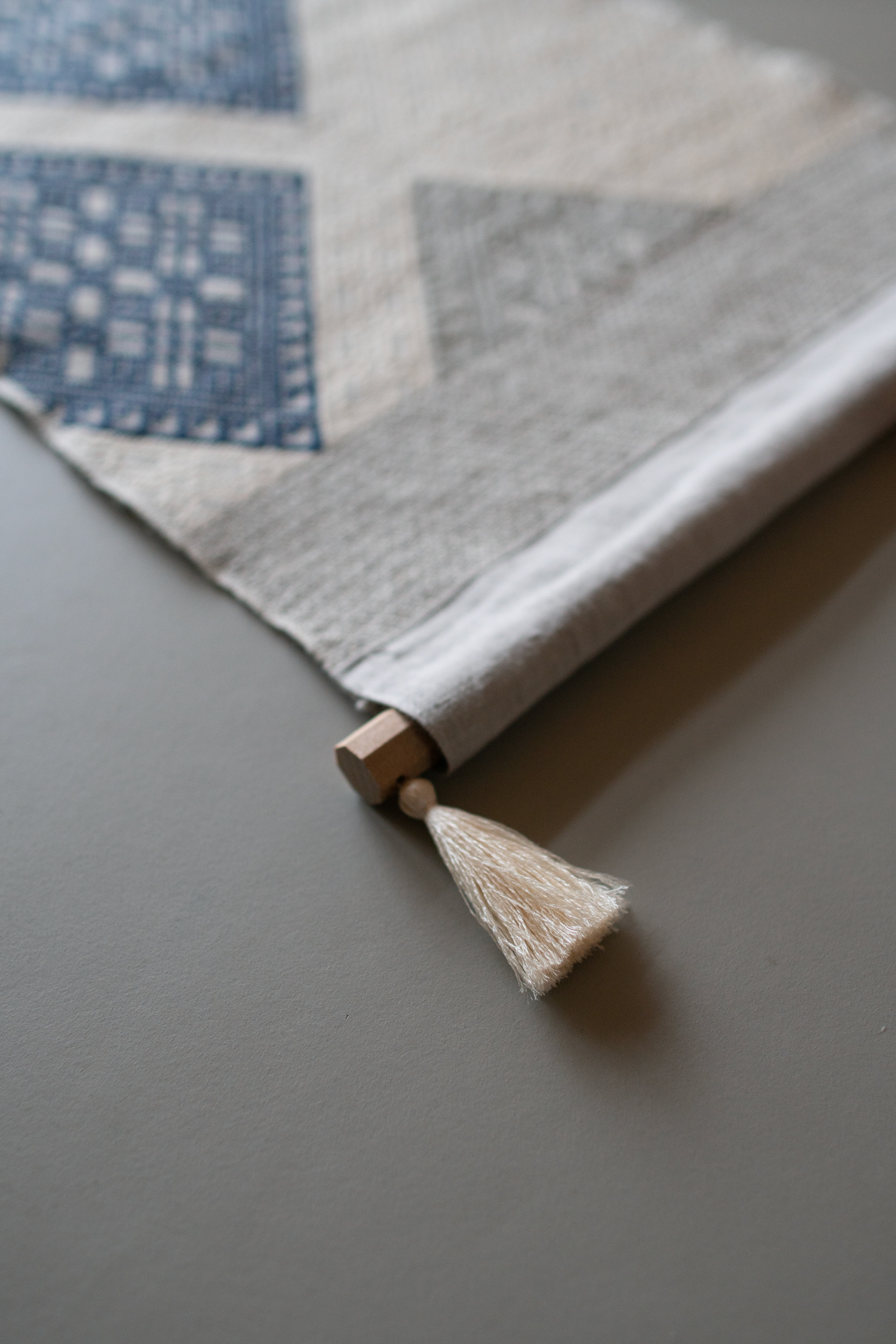
Cornucopia – Cornu copiae
Madoka Miura
From a sensory point of view, it was the first time I held it in my hand and it felt very fresh. It has a unique crispness, but it also has a glossy finish. If it is one, it will expand and contract, but if you put several together, it will not stretch. When tension is applied, the frictional force becomes stronger, making it easier to get caught when pulling the thread from the fabric, or loosen it. On the contrary, it becomes easier to come off. While thinking that it looks like human hair.
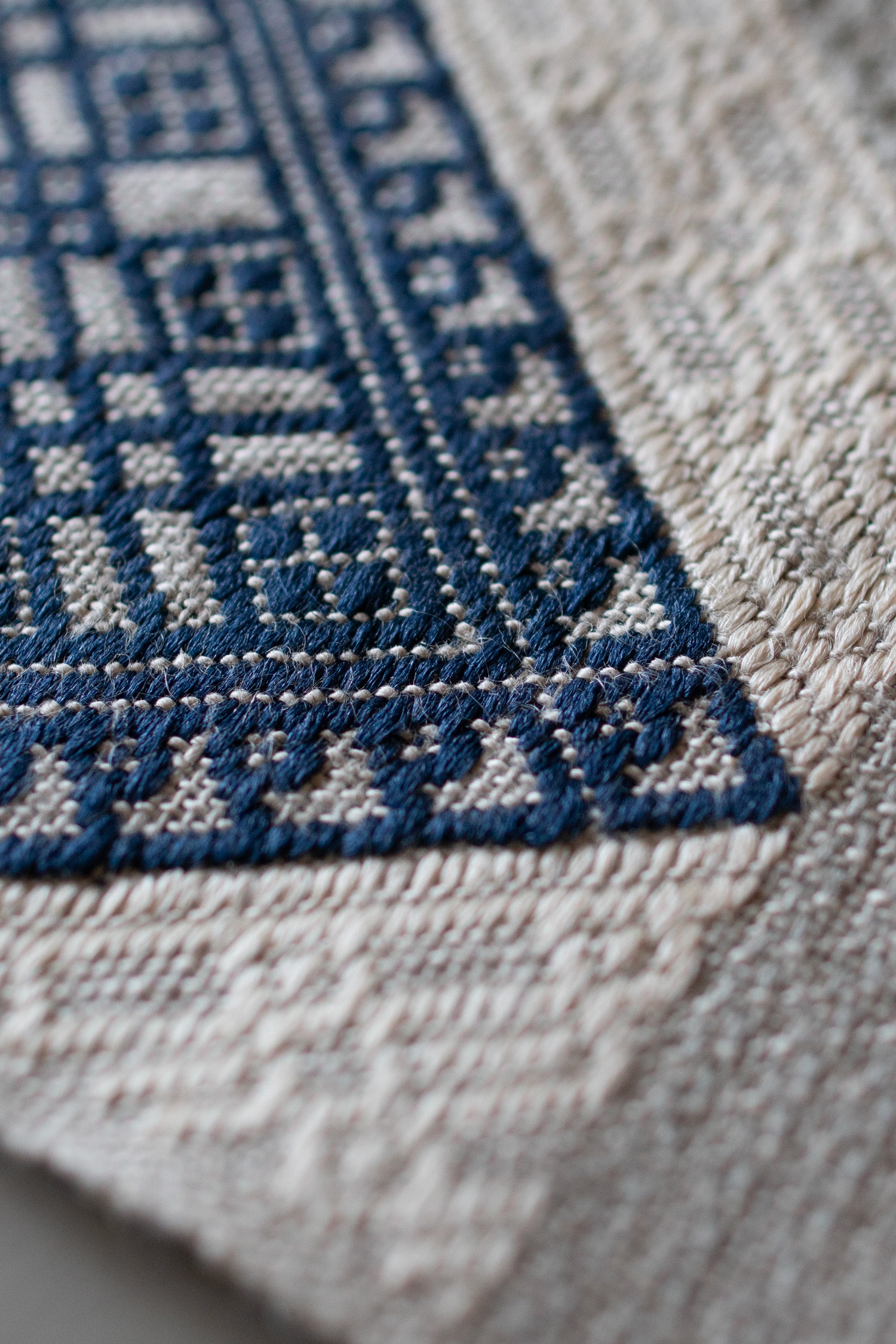
Up until now, I’ve only worked with plant-based materials, so I wondered what animal-based materials were like. It was difficult to handle, but gradually we became friends. Regarding the material, does ironing denature the protein? The feeling of crispness and strength has faded a little, and it feels more supple. As for the compatibility with Kogin-zashi, it was a lot of fun to try it as a project, and I personally think it’s a different expression! It was a feeling to say. For regular use, Kogin-zashi is a perfect fit for hemp and cotton, and the fact that it doesn’t depend on the thread makes it less plump (however, it’s shiny, so it’s as good as it is♡), and it doesn’t have a lot of tension. Thread processing is difficult because the frictional force in the state is not good enough. And there is also a sense of accomplishment.
You can also see the different expressions of Koginzashi, which is a suggestion! as a plan the law of nature! That’s my impression.